.png)
Is Self Storage a passive income?
To be able to answer the question “Is self-storage a passive income?”, we need to look at what a passive income is.
What is a passive income?
According to Investopedia, passive income is earnings derived from a business in which a person is not actively involved. Colloquially, it’s used to define ‘money being earned regularly with little or no effort on the part of the person receiving it.’
(Back in the real World, this usually means investing and sitting back to reap the rewards. It’s impossible to just put money in and reap the rewards without doing something or paying someone to make things happen. The oft quoted example of passive income is rental properties. Many a landlord will be laughing their socks off at the thought of it being no work, as tenants need their homes or offices maintained, and problems need resolving, so say nothing of the income gaps and rent defaults.)
Is self-storage a passive income?
At easyStorage, it’s obvious that we believe self-storage is a good investment, and this has been backed by others: Is self-storage a good investment?
However, putting in investment and running a business are two different things. Our franchisees train hard and work hard to deliver a superlative service for their customers. This reflects in our TrustPilot scores, which we are incredibly proud of: https://uk.trustpilot.com/review/easystorage.com.
For a franchise like easyStorage, the set-up phase is always going to be the most intensive. (Sadly, last year COVID slowed up training etc because we couldn’t get together.)
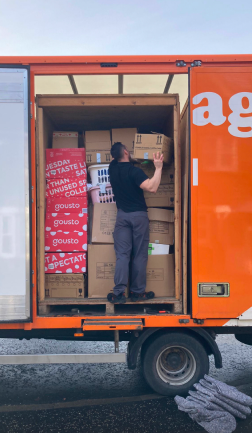
From learning to drive an easyTruck to staying safe, and importantly learning the easyStorage values, joining the easyStorage family is more than just putting in some money. The storage space must be found. And so must customers. Whilst some may say ‘If you build it, they will come’, our business model is that we collect goods from our customers, and return them. This model allows us to operate with both a better service offering for the majority of customers and a cheaper storage model – profitably, of course, which is good for customers as it means we’re confident we’ll stay in business.
The only way that this can be a passive income is by having the right staff/manager to do the work and sit back. And, indeed, this is what some of our franchisees or their partners choose to do.
Others amongst our franchisees are already running property franchises which are now ticking over. The easyStorage franchise complements these beautifully. (Home selling and property renovations, for example, benefit greatly from having storage to hand.)
So, “Is self-storage a passive income?”. What’s the answer?
In a nutshell, it can be, depending on how you choose to structure it, but the work still has to be done!
You can find out more about what’s involved in being an easyStorage franchisee here: https://www.easystorage.com/franchise.

.png)