.png)
Rethinking Storage in the UK: How easyStorage Is Redefining Value, Scale and Service
In a recent cover story for The Movers and Storers Magazine (May/June 2026), our CEO Tim Slesinger sat down with Patrick Hicks to talk about something he's been working on since 2017: changing what storage in the UK actually feels like to buy and use.
Below we've pulled together the key points from that conversation – why the UK market was ready for disruption, how mobile self-storage and drive-up sites fit together, why we built our own technology platform, and where we go from here.
A market that looked out of balance
When Tim first looked at UK self-storage in 2017, the numbers didn't add up. The UK market was worth around £750 million. The US market was worth roughly $42 billion. Hundreds of operators in the UK, and only two listed businesses.
"It just looked out of balance. So I looked into it further."
What he found was a sector with strong fundamentals – storage is, as he puts it, "the original subscription business" – but priced in a way that pushed customers away.

From "distress purchase" to part of everyday life
In the US, storage had become affordable enough to be a lifestyle choice. In the UK, it was typically triggered by something stressful: a bereavement, a divorce, a sudden relocation. People bought storage because something had happened to them – and got out as quickly as they could.
Tim's hypothesis was simple: bring the price down enough, and the buying pattern shifts from event-driven to habitual. Customers stay longer, and storage starts to feel like a normal part of running a home or a business.
The data backs it up. When easyStorage launched, the average length of stay was around 37 weeks. Today it's 63 weeks.
Why "easy"
Convenience alone wasn't going to be enough. A challenger brand also needs an instantly recognisable value identity – and that's exactly what the easy family of brands provides. easyStorage is a licensee of the Easy Group, which means the proposition is clear the moment a customer sees the name: value pricing, mass-market reach, no nonsense.
Without that, Tim argues, it could have taken years and significant marketing spend to explain what we were doing differently.
Rethinking the economics of removals
Tim is careful not to dismiss traditional removals – there's absolutely a place for full-service, professionally packed moves, particularly for larger households or higher-value possessions. But he believes the economics of the traditional model have often worked against affordability for the average customer.
Two cost drivers stand out:
- Surveys. When operators carry out many surveys for each successful booking, the cost of all those unsuccessful quotes ends up being absorbed by the customers who do proceed.
- Professional packing. Labour-intensive, valuable in the right context – but not always especially profitable, and not always necessary.
The easyStorage answer: strip the model back for smaller jobs. Skip the survey. Let customers estimate their own requirements. Encourage self-packing for most items, and reserve specialist packing for where it genuinely adds value.
Tim's comparison is to aviation. Private aviation exists at one end. Mass-market flying exists at the other. The moving and storage industry, he believes, needs the same kind of differentiation – not one cost base for every customer.
Drive-up storage: a fragmented market with room to improve
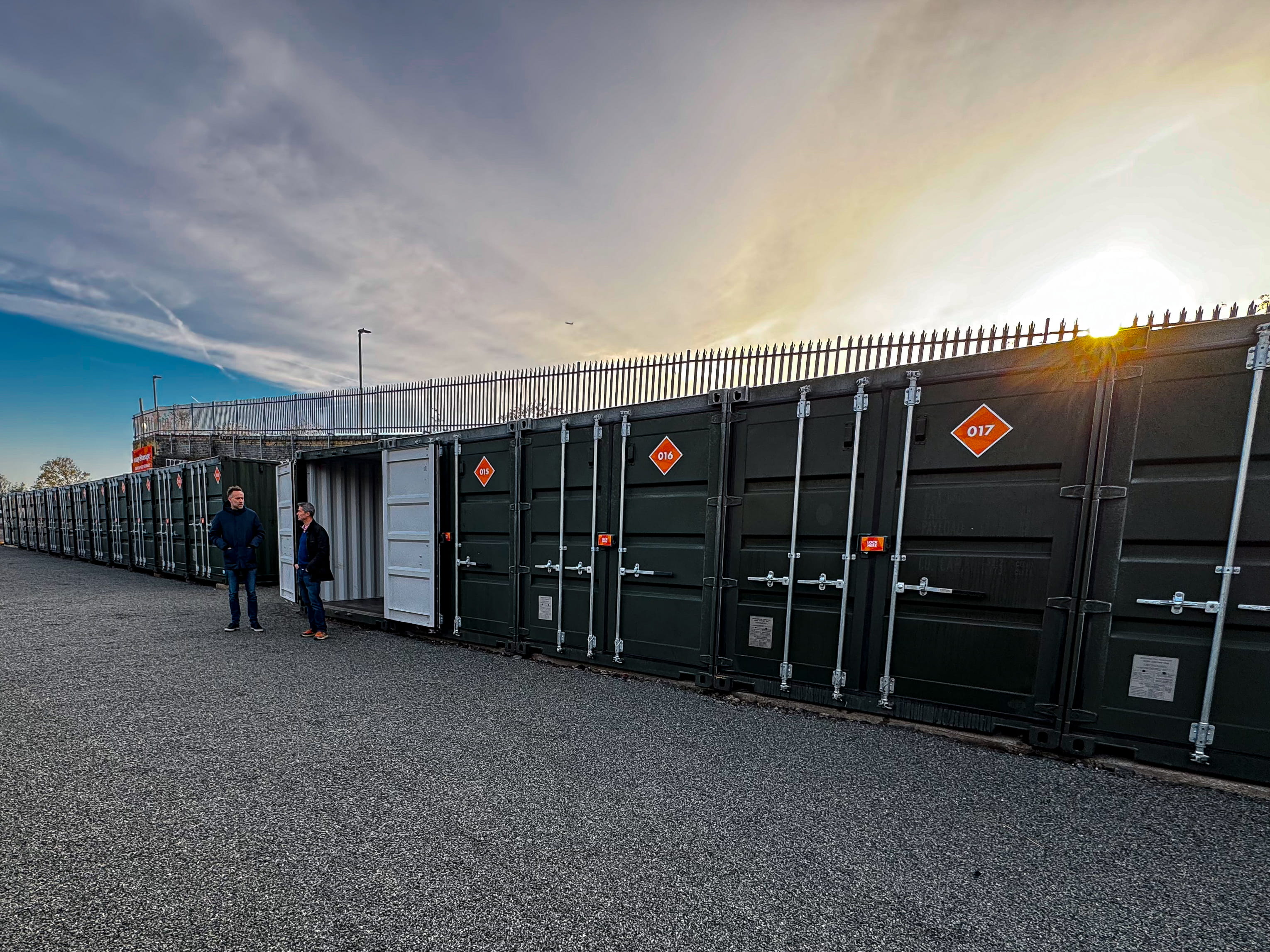
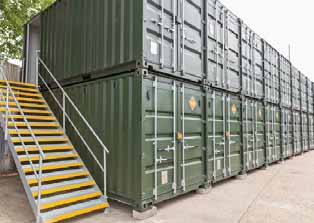
Four years ago we expanded from mobile self-storage into drive-up, container-based self-storage. At the time, around 1,000 sites in the UK were operated by roughly 500 companies. Many had grown organically – sometimes as side businesses – without the systems, processes or brand discipline a scaling operator can bring.
We saw an opportunity to bring more professionalism to that end of the market without losing the value appeal that made it attractive in the first place.
The franchise model – and why it works for mobile
One of the more distinctive parts of our growth model is that it's mixed.
On the mobile self-storage side, franchising was built in from day one. When a service is collected and delivered at the customer's door, highly motivated owner-operators are hard to beat. Franchisees care because the result is theirs. Today, our mobile self-storage franchise network covers around 85% of UK postcodes.
On the drive-up/container side, sites are unmanned – which makes it easier to combine franchised, owned and acquired locations. Our target is 300 container self-storage sites across the UK over the next five to seven years, and the rollout will involve all three routes.
That ambition is backed by an asset-backed facility of up to £180 million secured from alternative credit manager Arini earlier this year, which is funding the nationwide rollout alongside the acquisition of income-generating assets in key markets.
Value doesn't mean poor service
Tim makes an important distinction between low-cost and low-quality.
On the mobile side, prices needed to come down through efficiency. On the drive-up side, he argues the market has historically been undervalued – container storage has traded at a steep discount to walk-in self-storage, partly because of a genuine quality gap: weaker branding, less polished onboarding, more ad hoc customer experience.
If the product improves, that discount doesn't need to remain so wide.
"We do not believe in sacrificing service for price."
The opportunity, as he sees it, is to use technology and process discipline to generate savings, then reinvest part of those savings into better service while still keeping a price advantage. Reduce price, protect margin, improve service – all at once, provided the operating model is efficient enough and the business has scale.
VAULT: technology as the backbone
Early on, we expected to be able to buy our software off the shelf. It turned out nothing on the market could integrate moving, warehousing, storage, franchise management and billing in the way we needed. So we built our own platform: VAULT.
VAULT runs the customer journey, franchise oversight, billing and accounting, and the operational link between our different service lines. On unmanned drive-up sites, it lets customers complete sign-up, ID verification and access arrangements in minutes – without anyone needing to be physically there.
A customer can arrive in the early hours and still be in their unit within minutes of pulling up. That kind of frictionless onboarding is increasingly what modern customers expect.

What customers actually want
Tim's view of what drive-up and container customers are looking for comes down to three things:
- Confidence that they're paying the right price.
- Speed and ease of immediate onboarding.
- Quick answers and genuine empathy when something goes wrong.
And one more – leaving should be easy too. Customers shouldn't discover they're trapped in a long contract if their circumstances change.
Rollout, retention and small business customers
If technology is the backbone, physical rollout is the engine. We've opened 35 drive-up sites in the past three years and are currently opening at a pace of roughly two a month.
But growth without retention is of limited value. One number that tells us a lot: around 63% of our drive-up/container customers are small businesses. Trades, local operators, small firms – the kind of customers who don't need storage as a one-off emergency measure but as a stable part of how they run their business. Keep the proposition sensible and those relationships become long-term rather than fleeting.
The Drop & Store partnership model
Alongside our franchise network, we've increasingly partnered with traditional removals and storage operators to extend coverage and improve utilisation.
The Drop & Store model is a good example. Rather than requiring easyStorage to collect every order, customers can bring their belongings directly to approved partner depots and storage facilities. That reduces transport and labour costs, makes storage cheaper and more accessible for customers, and creates an incremental revenue stream for local operators with spare capacity.
For us, it improves scalability and geographic reach without equivalent capital investment in vehicles, depots or staff. For partners, it brings in new customers and helps fill existing space. Rather than competing against the traditional removals and storage industry, we increasingly see ourselves as a platform that works alongside established operators.
A market with room to run
The UK storage market has already expanded sharply since easyStorage launched, and we believe there's still substantial headroom. Using US penetration as a guide, Tim argues the British market could eventually be worth between £3 billion and £5 billion.
That confidence shapes our international thinking too. easyStorage has already entered the Netherlands through a licensing arrangement and local partnership, and wider European expansion is firmly on the agenda. In the UK, the aim is straightforward: to become the go-to brand for storage.
Lessons from scaling at pace
Asked what he's learned from growing this quickly, Tim's answer is a simple image: a three-legged stool.
Marketing. Finance. Operations.
Scale one of them too far ahead of the others and the whole thing becomes unstable. Growth doesn't need to be cautious – but it does need to be balanced.
Where this goes next
We don't see ourselves as just another storage operator. We're trying to change the terms of the category itself: to make storage more routine, more transparent, more technologically enabled and more affordable – without stripping out the human side of service.
For years, much of the industry has been built around the economics of scarcity, inconvenience or legacy pricing. We're betting on a different future: one in which storage stops feeling like a reluctant necessity and starts feeling like a normal, trusted, scalable service.
Looking for storage?
Whether you're moving home, freeing up space, or running a small business that needs a reliable base for stock and equipment, we'd love to help.
This blog post is based on the cover interview with Tim Slesinger published in The Movers and Storers Magazine, May/June 2026 issue.

.png)