.png)
Is Self Storage A Good Investment?
Are Self Storage Units A Good Investment?
Self-storage is growing in popularity.
As COVID changes the way we live, people are making space for home offices, consolidating homes, or even downsizing. Britain’s homes are smaller than ever on average. It’s hardly surprising, therefore, that it’s increasingly recognised that decluttering can help de-stress
All of these things contribute to a need for more self-storage. In March, we blogged about ‘The State of Storage’
We are now able to update this thanks to the recent release (May) of the Self-Storage Association UK (SSA UK) Annual Report for 2020, in conjunction with Cushman & Wakefield.
If you are considering investing in self-storage as a financial proposition rather than a storage one, the following may ‘whet your appetite’ so to speak.
Current Demand for Self-Storage
Demand for self-storage is increasing: across the board, self-storage occupancy rates have risen to 82.3%. This is up from 76.2% last year and has been steadily increasing since 2011, when occupancy rates were just 62.7%.
During the pandemic, the industry continued to grow. Around 100 new storage units opened over the past year, with some construction rolling into next year due to construction industry restrictions under COVID rules.
Pricing staying buoyant
There are just under 2,000 self-storage stores in the UK. However, despite extra space AND the pandemic, UK average net rental rate for storage space rose by 3.7% on last year. 78% of storage companies surveyed predicted an increase in storage fees this year.
At easyStorage, however, systems and technology keep prices down https://www.easystorage.com/blog/cheap-storage-how-do-we-do-it to around half of traditional self-storage costs whilst remaining a profitable and sustainable business, which is important to customers storing with us as to us.
Profitability
The SSA UK survey users use EBITDA (Earnings before Interest, Tax, Depreciation and Amortisation) to measure profitability/growth of storage businesses over the last 12 months. Smaller companies showed an average 19.5% increase, with businesses overall showing an increase of 2.4%.
The figures come with a proviso that not every company surveyed uses this measure, so the data was limited, but does, at least, show a move in the right direction for investors.
Resilience
Only 17% of existing customers had their usage or need for usage change during the pandemic, and more saw an increased need than saw a dropped need.
We believe that the market WILL change a little due to COVID, as a return to a new normal will see many people moving or downsizing. And of course, there will be people who have sat tight on storage during the pandemic, so we may see changes once lockdown restrictions are truly eased.
Nonetheless, the sector has stayed open and stayed stable during the crisis, and we have no abnormal concerns that storage will remain a resilient business – for many of the reasons exposed in this blog.
Customer-friendly business
According to the SSA, 92% of customers are satisfied with their self-storage. (easyStorage lies at 96% on TrustPilot at time of writing.)
Last year, less than 20% of respondents said they used an online review site before booking storage. Google reviews and TrustPilot were the most referred to. This has boomed in the past year.
And despite old fashioned perceptions of self-storage as a ‘one-off need, there’s a high repeat demand, with 43.3% of self-storage customers having use self-storage previously.
66% of customers think their self-storage represents good value for money, and whilst some waver, only 14% believe their storage represents poor value for money. (Guess those few haven’t found easyStorage yet!)
According to the survey, around 50% of the public consider that they have good awareness of self-storage. Wait until the other half find out!
Home moving continues
The data indicates that the United Kingdom will experience a large percentage increase in both total and urban population growth, although rural populations may fall (which surprised me given lower population density rates and fresh air being a positive for resisting the spread of COVID.)
To be specific, UK urban population is projected to increase by 3.7 million, the rural population is forecast to decrease by 1.3 million, and a total projected population increase of 2.4 million by 2030.
With pressure on urban spaces and a higher population, it’s easy to see how extra storage space could be needed, to say nothing of the need for storage whilst moving. (Almost a third of storage space is used by people in the process of moving.)
Pressure on Homes
According to the report, ONS data indicates the average UK household size will remain one of the highest in Europe (2.4 persons per household) until 2029, when it will decrease to 2.3, although England by itself is projected to decrease to 2.3 persons per household by 2025.
The average UK property size is already smaller than in other countries, so urban migration/ population growth and an under-supply of new houses will create pressure on space, which in turn leads to higher use of self-storage facilities.
Investing
According to the report, “The strong fundamentals of the sector, along with its resilience during the pandemic has made self-storage very appealing to investors”.
Anecdotally, there is a greater number of high-profile institutional funds and private equity houses trying to diversify due to the pandemic.
Some will be looking to invest in warehousing to rent to operators, so we don’t feel we can read too much into this, other than to say that easyStorage was set up to create a good investment by both its founders and for its franchisees.
However, we concur with the survey that the market’s strong performance has created an additional demand and created an under-supply, which in turn has driven pricing.
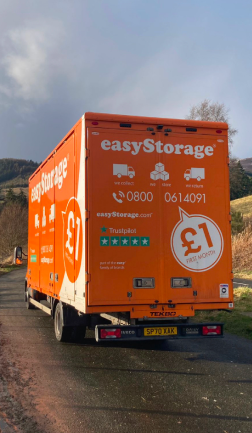
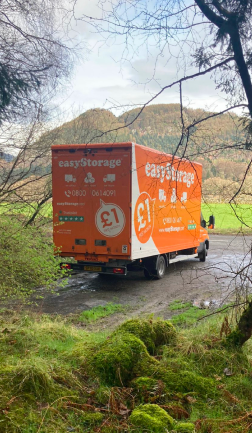
‘Mobile storage’ like easyStorage takes advantage of more unorthodox sites and location, and uses technology and different business models to keep prices down. As the wrap around service is collection and delivery, despite offering a better service, easyStorage is able to keep prices lower by better use of expensive warehouse space.
If you’d like to talk about franchising with easyStorage, you can find out more here, including how to contact us to find out more: https://www.easystorage.com/franchise


.png)