.png)
How to Pack and Store Baby Toys Without Any Tears!
There are many reasons for packing up baby toys.
Perhaps you’re moving. Perhaps you’re storing them for another sibling or baby in the family. Or maybe you’re packing them for you as a keepsake.
Whatever the reason, there are some basics to packing that are well worth remembering, and usually a good, hard declutter is the best starting point. Getting rid of what you won’t want or use is a great way to avoid having too much to sort out later. And it will save you space (and sanity!)
So remember that giving away, selling, donating are all great ways to give a new home to older toys. Dispose of any that are no longer safe to use or whose missing parts haven’t reappeared for a while as a priority.
In general, sticking to small/medium sized boxes will make moving and grouping types of toys far easier (outsized stuffed bears excepted, of course!) And grouping types of toys (e.g. soft toys, play mats, cot toys etc) will make things easier to locate, and the box easier to label. You’ll be able to use just one label saying soft toys rather than creating an inventory to search through box by box for favourite ted. Labelling those boxes well also pays back when it comes to unpacking, and increases the chances of you locating that one thing that will pacify the baby!
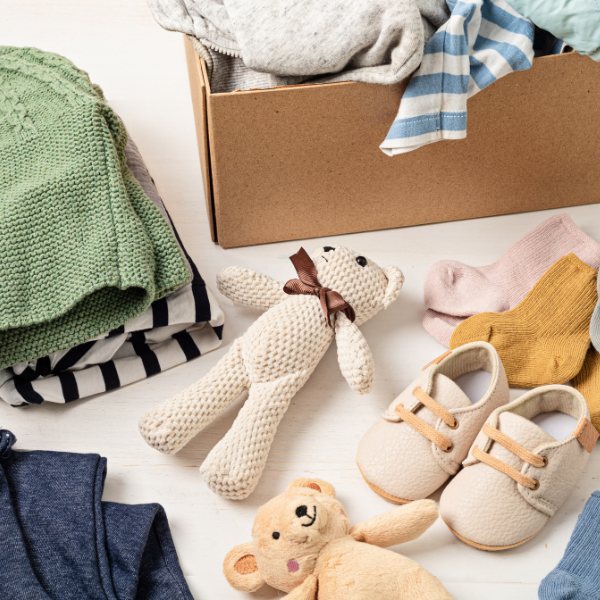
Before you start to pack, get together your packing materials:
· Good quality cardboard boxes
· Labels
Put the toys in appropriate groups like bathroom toys, soft toys and the like, as mentioned above. Then, having assembled all of your boxes and packing materials, make sure all of the toys are clean, disinfected where needed, and dried. Note that ‘dry’ also applies to any bath toys. The last thing you want or need is big lumps of gloopy mould floating around in baby’s first bath in their new home.
In general, how this is done will depend on what they are made of:
· Soft toys and cloth items can usually go through the washing machine.
· Plastics can be wiped with warm soapy water or disinfectant wipes. Some may even be suitable for putting through the dishwasher. (Check first!)
· Wooden items can usually be wiped over with a disinfectant wipe or dampened cloth.
· Book covers, and even some plasticised insides, can be wiped clear of fingerprints and dusted.
Remove any batteries, even if you’re moving, not storing. A jolted box can set a toy going, meaning at best worn out batteries, at worse a fight to find out which box is playing ‘Mary had a Little Lamb’ full pelt in the middle of the night, or worse, playing on repeat in the car boot. ‘Murphy’s Law’ dictates that it will start on the motorway as you pass the only available turn off for miles! And batteries in storage can corrode.
Securely close lids and tape up any toys with movable parts to avoid breakages during packing and storing.
If you want to save space by breaking down larger things in the nursery like carriers, high chairs, or cribs, put all parts in a bag taped to the largest piece to prevent loss and separation.
Tape down any boxed sets where parts of sets might fall out. Small canvas bags can also be great for holding things inside loose lidded boxes. Ziploc type bags are great for keeping small parts together, like all the parts of a cot for example the mobile.
When filling the packing boxes, work by putting heavier and/or bigger toys in the bottom of the moving box and then layer smaller/lighter items on top, filling any spaces with either smaller toys or clean packing paper.
It’s a personal preference, but I like to protect the toys a little more by wrapping each individually. (My children are now young men and out at work, but I still have their stuffed toys in perfect condition, despite having moved repeatedly.)
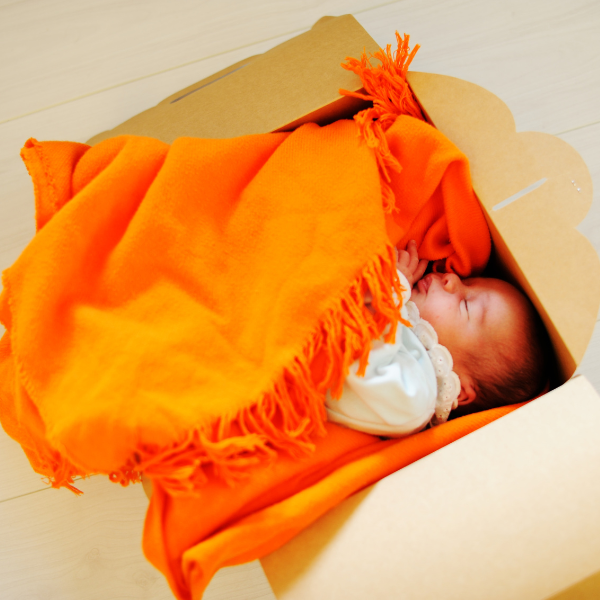
If you’re packing to move rather than to store, make sure you leave out some favourite toys for baby as travel ‘hand luggage’. A little familiarity will help them make the transition to a new environment smoothly. It’s also smart to pack baby’s room (or children’s rooms in general) last and unpack them first.
May we at easyStorage be the first to congratulate you on your move if that’s what you’re packing for, and remind you that we are always here to help with any storage needs. Make a booking with us here!
.png)